

‘Diana’ contact sheet photographs
by DAN ZAMUDIO
A contact sheet is a routine darkroom artifact produced when film negatives are placed directly onto print paper then exposed to light. After the print paper is processed, a positive index of all images will appear. This index is used by the photographer to select the best image or images to make into individual prints.
The majority of my photographic work is shot with a toy camera called the “Diana.” Since the Diana has no zoom, no focus, and a slightly off viewfinder, I am generally limited to how much of a composition can be framed within the single exposure.
To combat the limitations of the single-frame image, I experimented with the creation of a more complete image using the contact sheet. The Diana camera allows 16 separate exposures per roll of film. On one contact sheet I am able to see the entire roll of film laid out into four rows with four separate images exposures per row. By breaking down a composition into four levels, each with only four exposures, I am able to piece together one larger image onto the contact sheet.
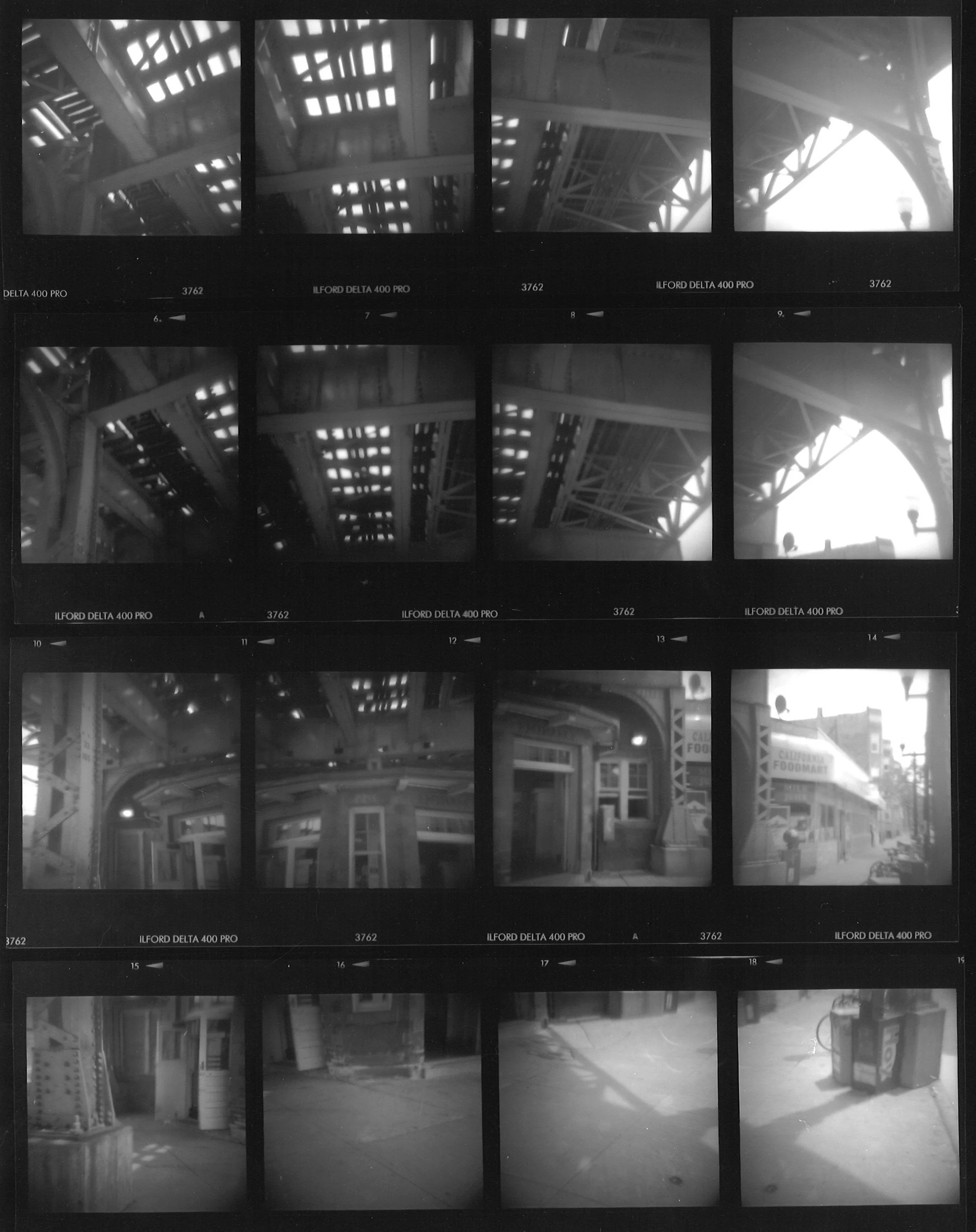
“California El Stop” (2026); Diana contact sheet photo
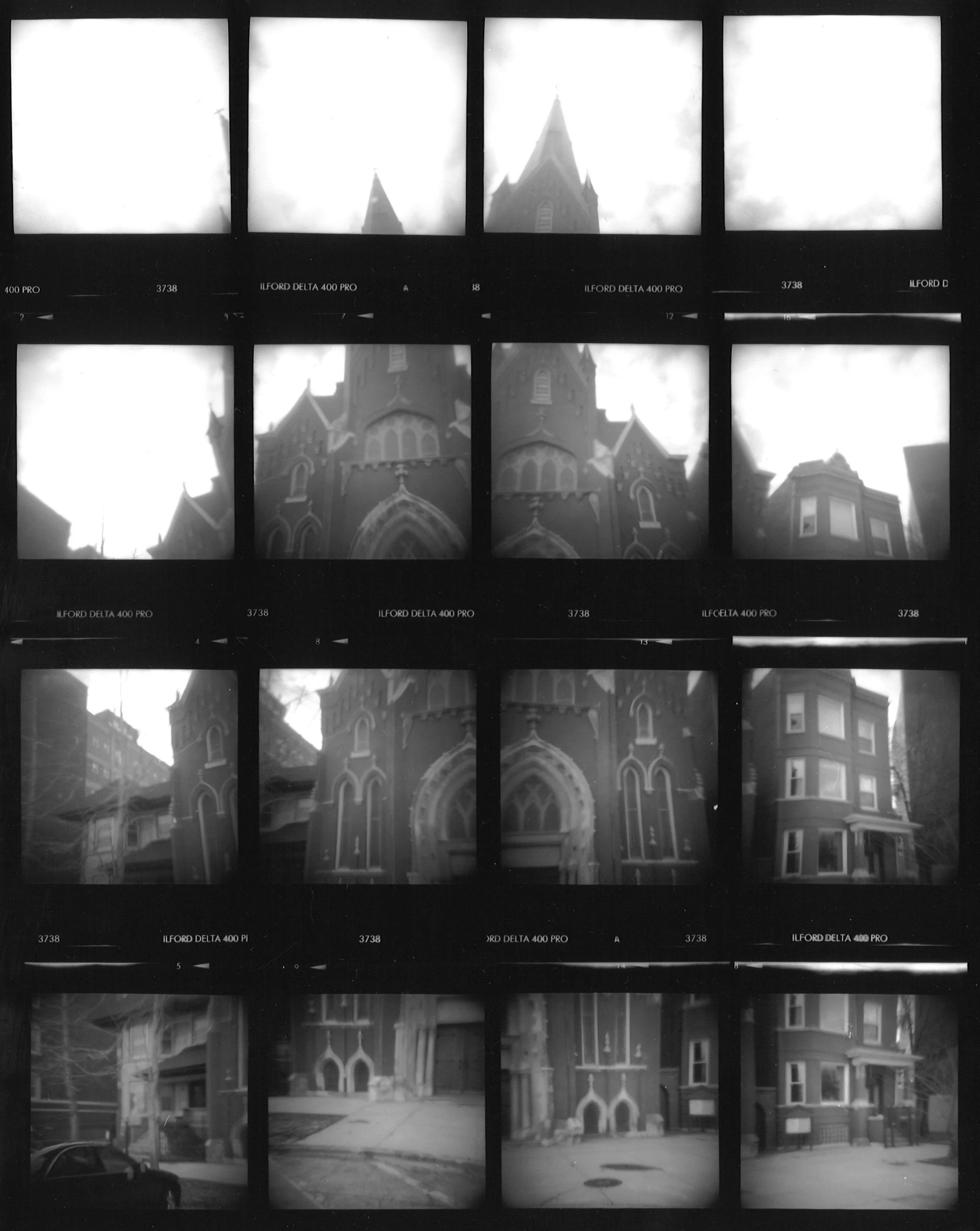
“Minnekirken” (2026); Diana contact sheet photo
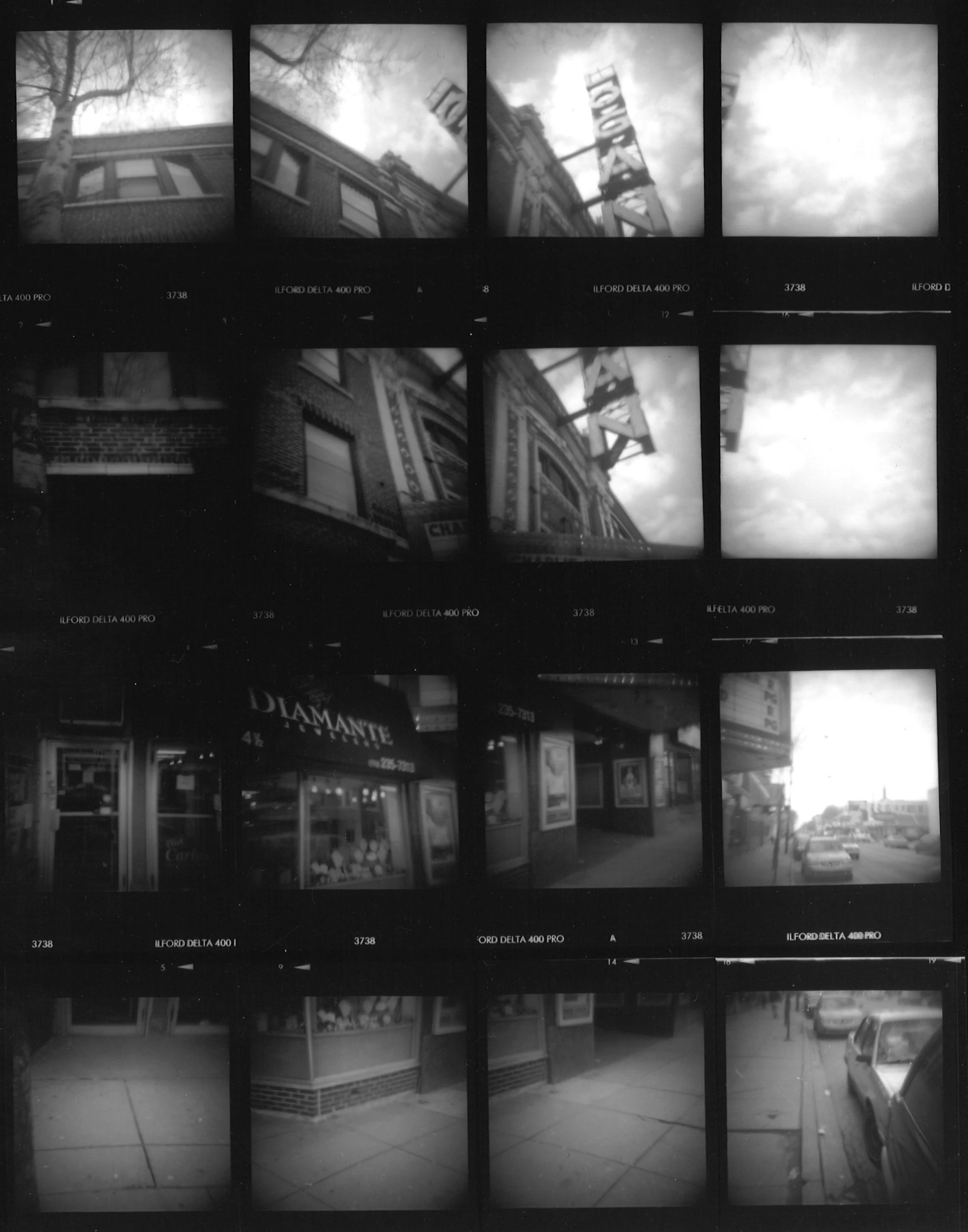
“Logan Theatre” (2026); Diana contact sheet photo
There are two main factors that contribute to the overall abstract look of the complete image. The first is in understanding that the Diana camera is always going to “see” a frame composition differently than the photographer. It’s a compromise between photographer and camera to what will actually get on film.
A second factor is the film is advanced manually after each exposure. This consists of removing the camera from the line of perspective and then making a reasonable guess to how high and where the next frame should be exposed.
After the film is developed, the negatives are placed inside a plastic sheet where I can see how the total image might look before making a print. If one or two frames are a bit off but they do not disrupt from the overall composition then I will proceed with making a print. If an entire row is off I will then have to shoot the entire composition again. I cannot re-shoot one frame or row to replace the bad exposure. There are too many variables such as lighting, shadows, and time of day that would be inconsistent with the original image.
Dan Zamudio’s photographic work centers on the use of traditional and vintage photography techniques. He uses both a plastic toy camera and Polaroid as tools to create images focused on architecture throughout the Chicago neighborhood landscape.